Timeless Winter Living Room Decor Ideas
Buying a box of seasonal knickknacks is the most common mistake with winter decor ideas for the home living rooms, and it’s why so many rooms look cluttered by the second week of January. Glitter pinecones and plastic snowflakes end up in the bin. Wool, leather, brass and real greenery stay.
Below are 21 classics, each with a long design history. They were picked because they survive pets, kids, wet boots and a few hundred dark evenings in front of the fire.
Winter decor ideas for the home living rooms: Ideas worth borrowing
Winter changes how a living room is used. It’s colder, darker by 4:30 in the afternoon, and people stay in it longer. Decor that works answers those physical facts instead of following a color of the year.
Every idea below solves at least one of these problems:
- Cold floors and drafty windows need heavy, natural fibers.
- Early darkness needs light at three different heights.
- Long evenings need a seat you can stay in for two hours.
- Gray weather needs one deep, saturated color to push against it.
- Clutter needs a hiding place, because winter means more blankets and more logs.
A wool tartan throw over the sofa arm
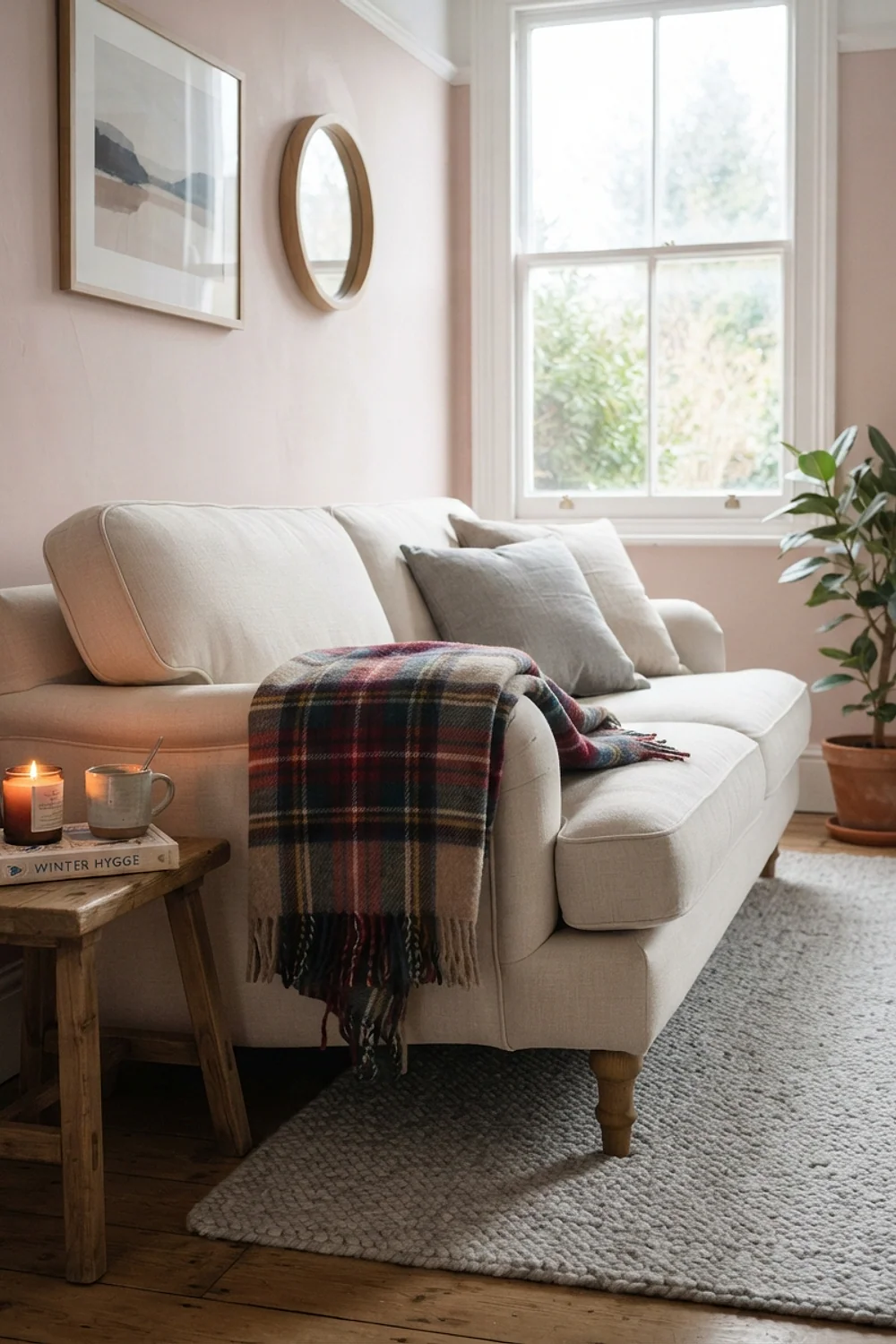
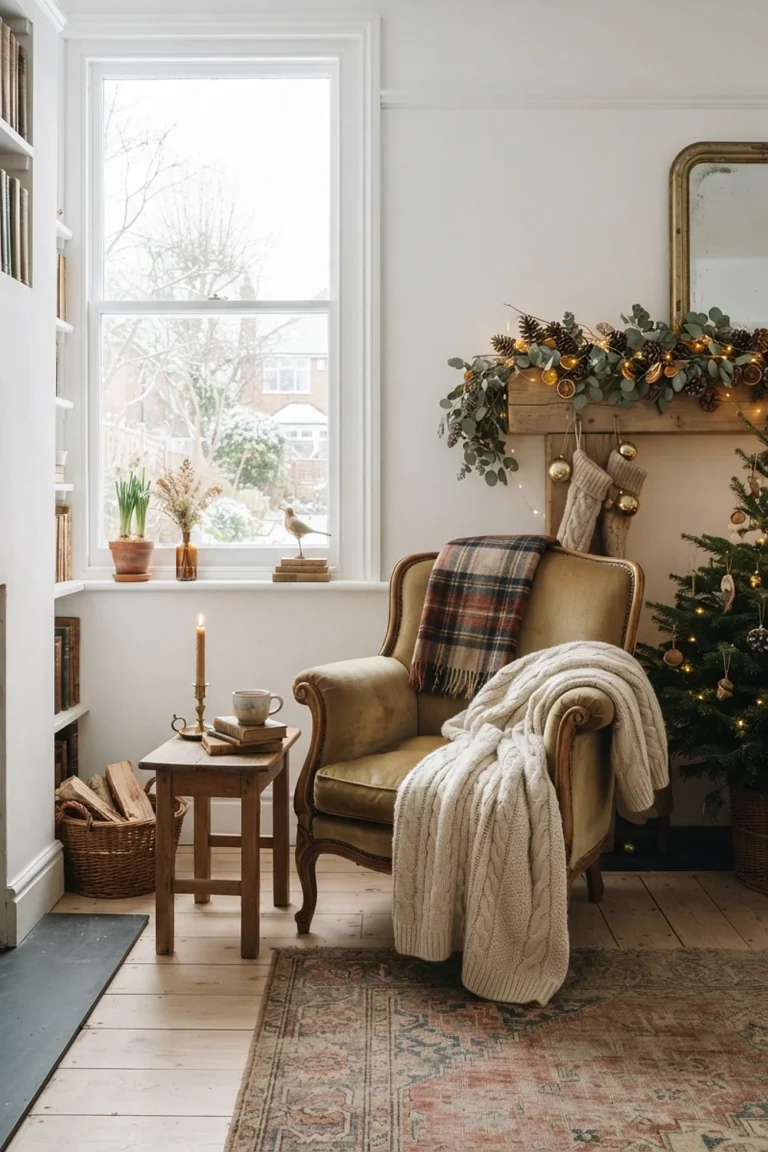
A wool tartan throw, about 50 by 70 inches, has draped over chair arms in Scottish and Welsh homes for centuries. Wool stays warm even when damp and sheds dirt instead of holding it, which makes it a smart pick for dog owners.
Skip acrylic fleece that imitates plaid. It pills within a season and crackles with static in dry winter air. Fold the throw in thirds over one arm rather than piling it in a heap.
One wall in deep evergreen
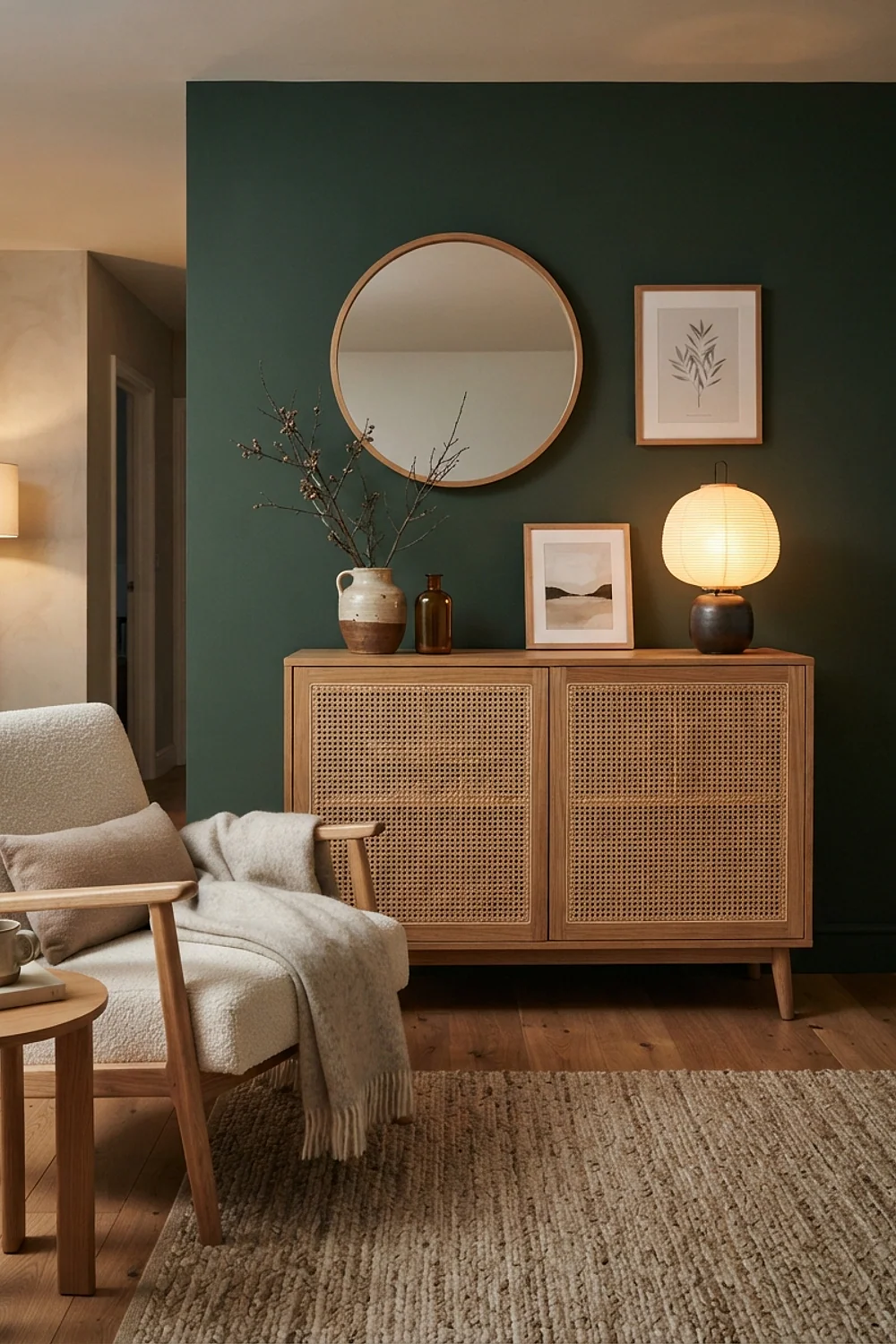
Painting a single wall a deep green, such as Farrow & Ball Studio Green, makes the room echo the garden outside, and Victorian parlors used the same trick. In north-facing rooms the color turns almost blue-black around 4pm, which is exactly the mood you want.
Choose an eggshell or modest-sheen finish in a house with kids. Flat paint marks the moment a sticky hand touches it, and you can’t scrub it without leaving a shiny patch.
A full-grain leather club chair
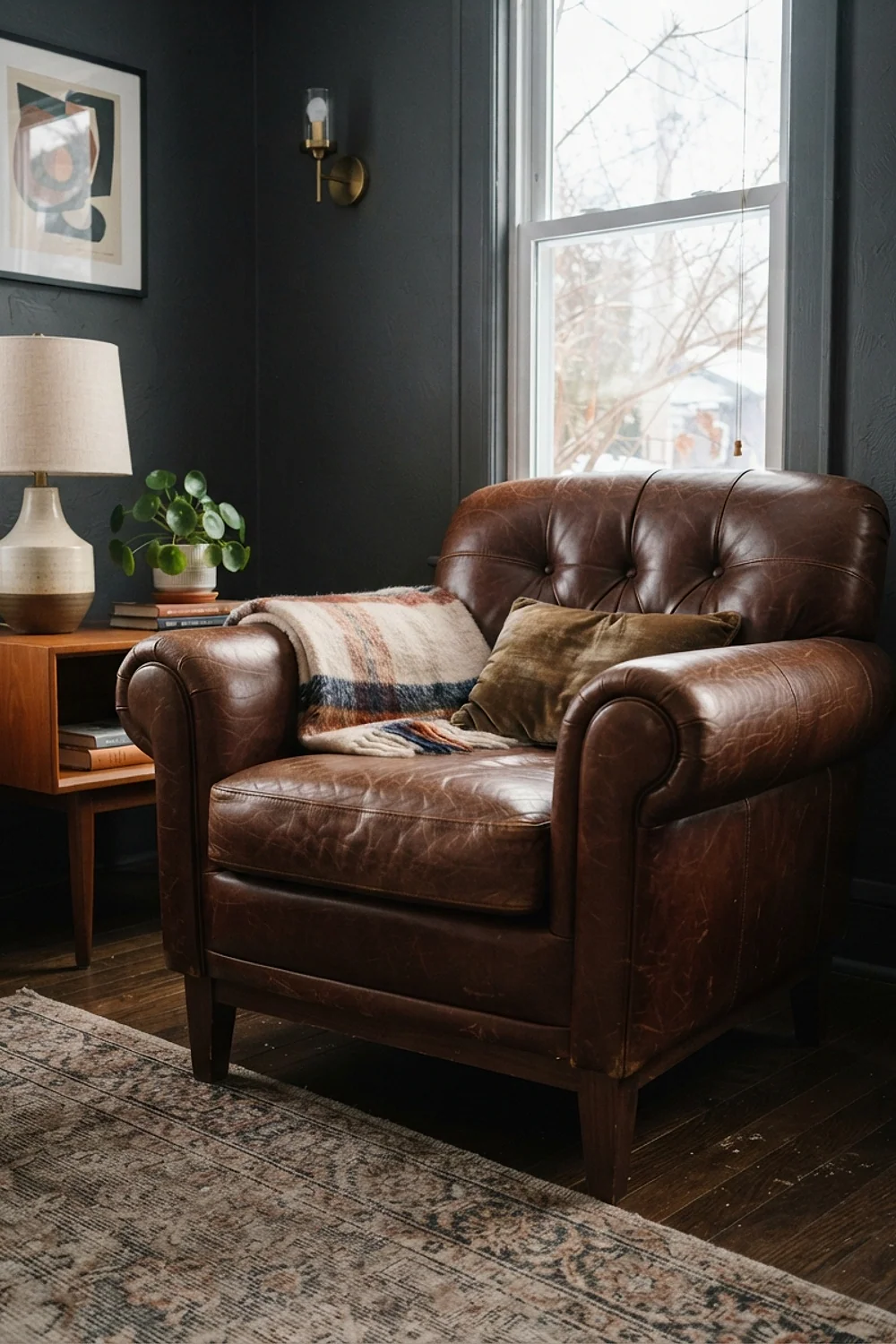
A full-grain leather club chair runs roughly $1,800 to $3,000, and it gets better as it ages. Scratches from a cat or a belt buckle blend into the patina, and a damp cloth handles most spills.
Bonded leather costs about $700 and is the false economy. It’s scraps glued to a backing, and it flakes within two years. The chair suits a reading corner or a household that actually sits down.
An oversized mirror over the mantel
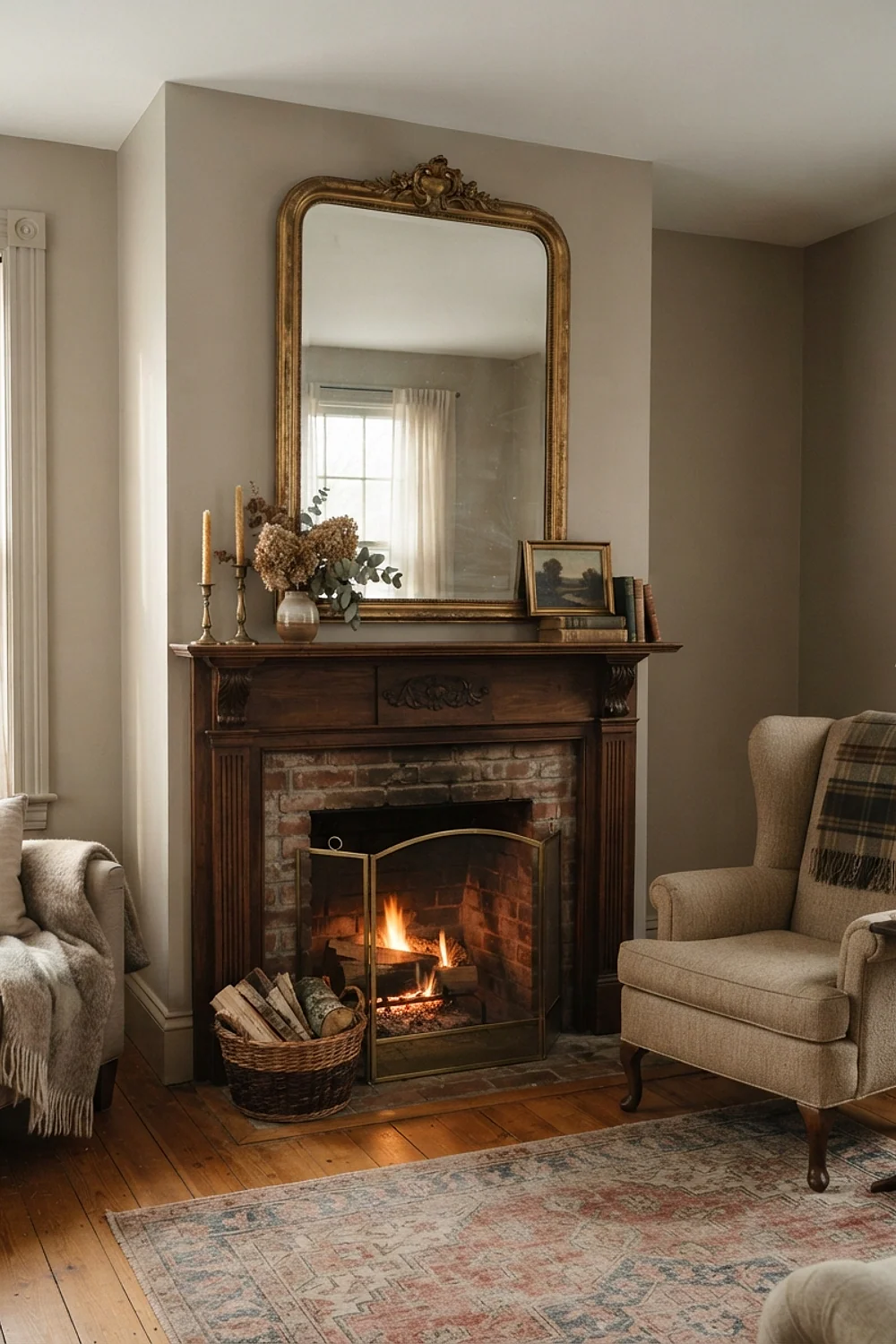
A mirror about two-thirds the width of the mantel looks deliberate, while one that is narrower looks like it got lost. A 40-inch gilt or aged-brass frame over a 60-inch mantel is a safe ratio. Hang the bottom edge 4 to 6 inches above the shelf.
The glass does a second job in winter. It doubles the glow of candles and the afternoon light that slants in around 3pm. Avoid hanging it opposite a bare window, which only reflects a gray sky.
Three lamps at three heights
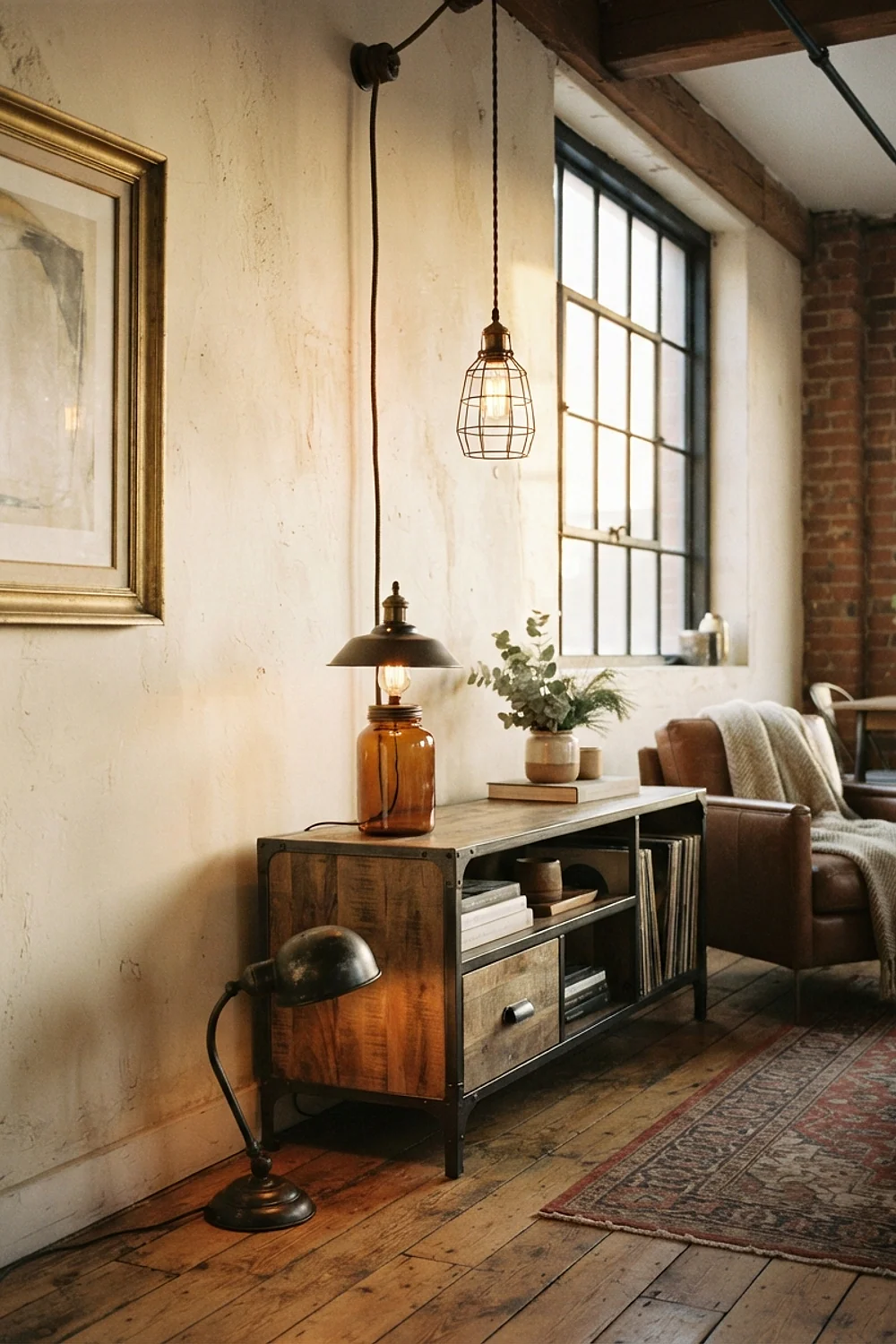
Lamps at three heights, roughly 15 inches on a shelf, 28 inches on a side table and 60 inches on a floor stand, wash a room in layered light. Use 2700K bulbs at about 800 lumens each. The effect is a room that looks lit from within, not interrogated.
A single overhead fixture is the usual mistake. It flattens everything and makes a December evening feel like a waiting room. Put the lamps on a power strip with a timer so the room is lit before you walk in.
The vision board
Unscented beeswax taper candles in brass holders

Beeswax tapers burn slowly, and a 10-inch taper lasts roughly 8 hours. They also give off a faint honey smell, which is why scented candles are the common mistake here. A scented candle competes with wood smoke, cooking and a wet dog.
Choose holders with a base at least 3 inches wide so a swishing tail doesn’t topple them. Keep the flame at least 12 inches from any garland or curtain.
A lidded log basket that doubles as blanket storage
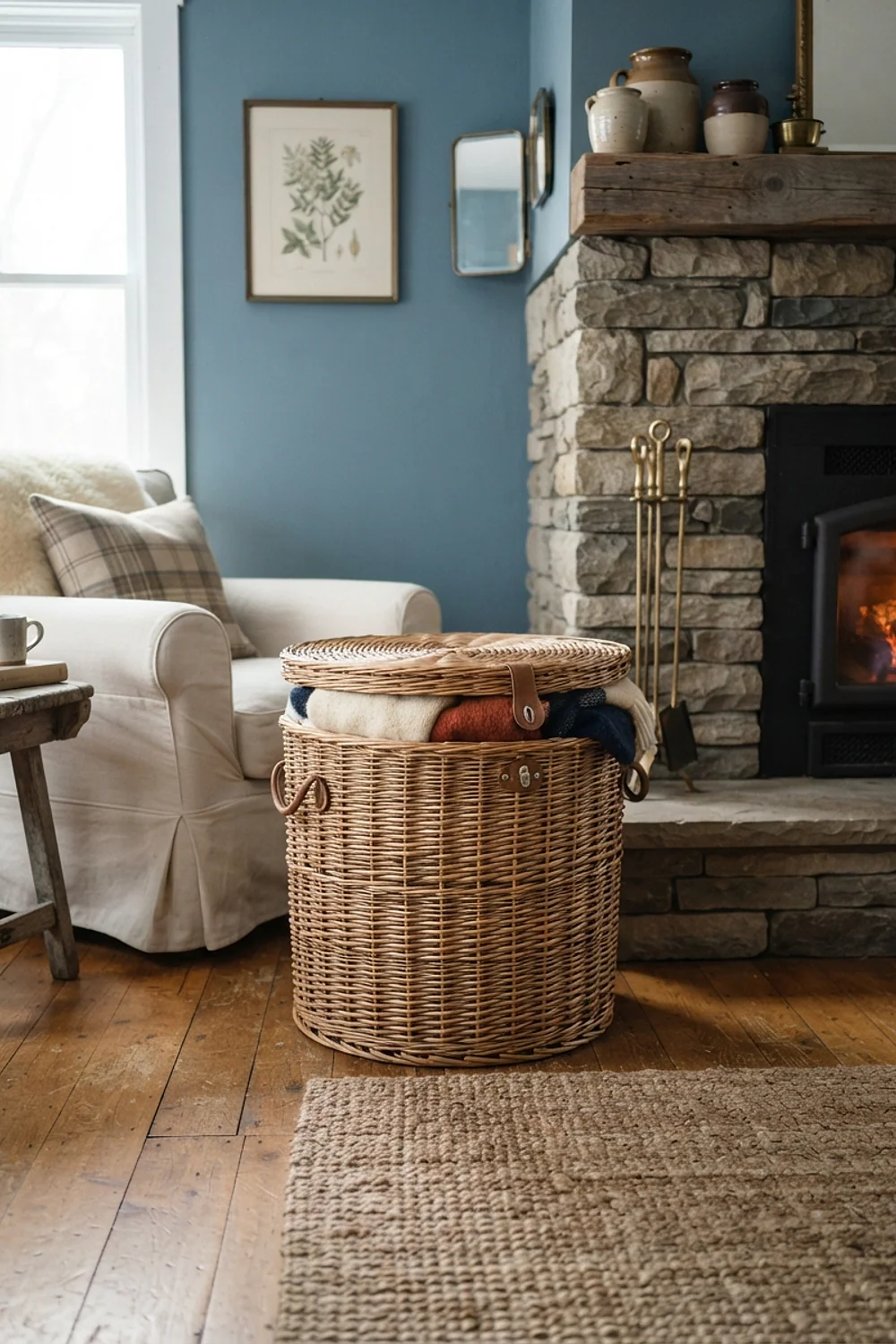
A lidded seagrass or willow basket, about 18 to 20 inches across, holds six to eight logs or three folded throws. In a small living room it clears the floor and gives the room one anchor on the hearth side.
Line the inside with a canvas or burlap sack. Bare weave snags wool and drops bark bits onto your rug. Rotate what you keep inside as the weeks go on, logs when it’s freezing and throws when it isn’t.
Interlined curtains that stop the draft
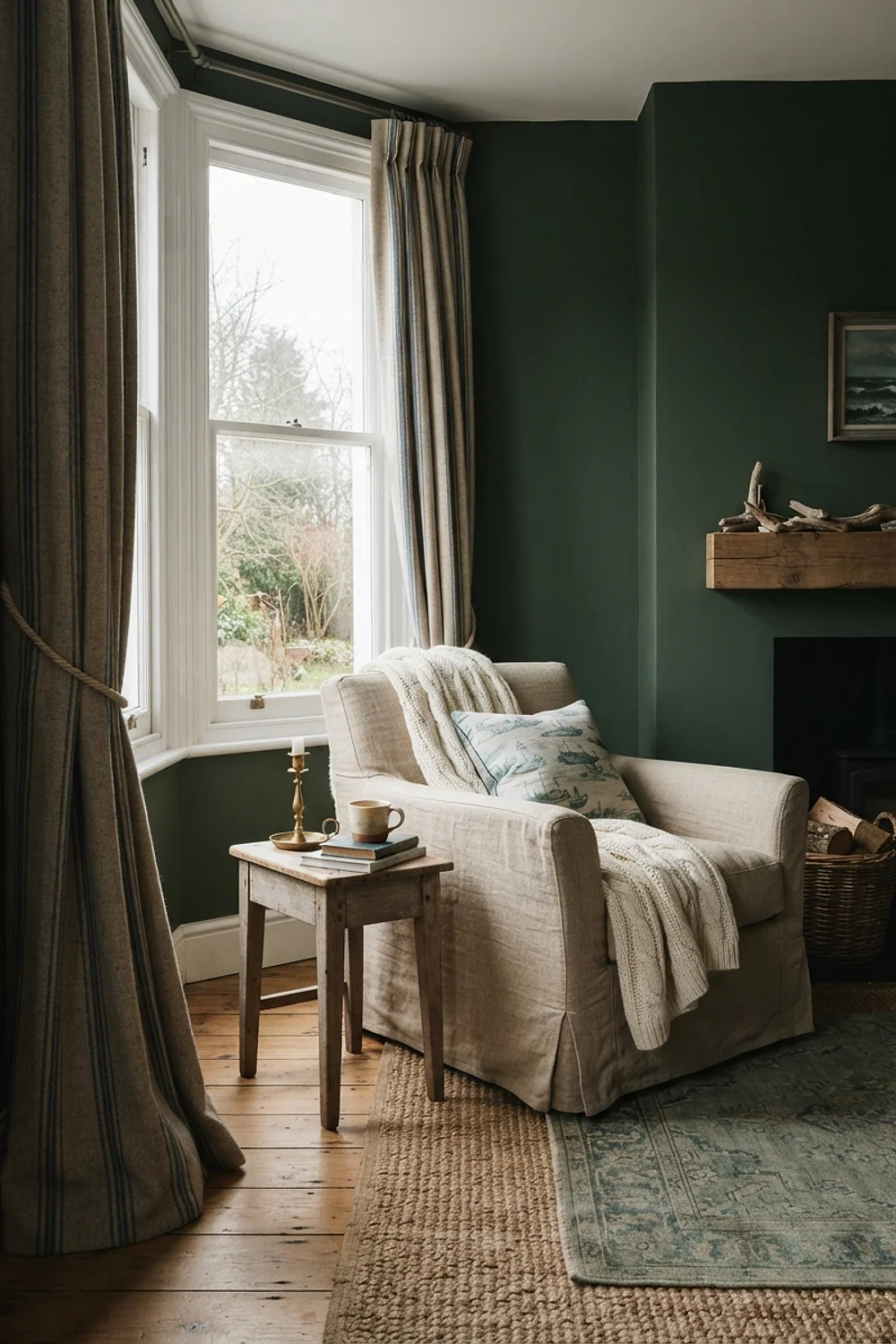
Curtains with a wool or thick cotton interlining can cut the chill from a single-glazed window noticeably. Custom panels run $250 to $400 each, while off-the-rack lined pairs start near $90 and still help. Hang the rod 6 inches beyond the frame so the fabric covers the window edges.
If a radiator sits under the window, stop the hem half an inch above the floor. Pooled fabric traps pet hair the way a garden hose collects leaves, and it blocks the heat you’re paying for.
A flatweave wool rug under the seating
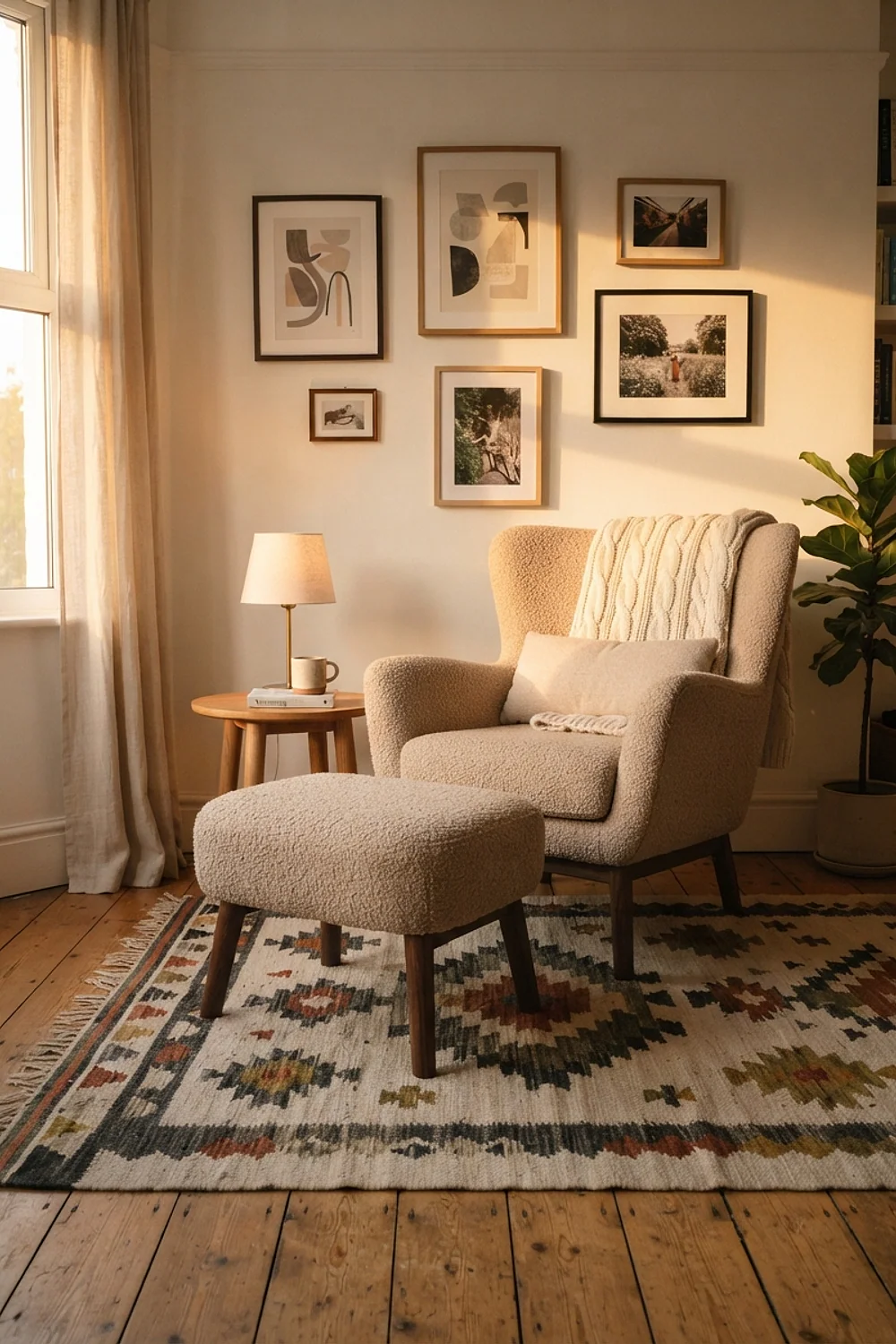
An 8 by 10 wool flatweave keeps feet comfortable on cold floors, and it’s tight enough that crumbs vacuum out instead of burying themselves. Put at least the front legs of the sofa and chairs on it. That grounds the arrangement and keeps the pile from sliding.
Shag rugs feel good for one week and hold crackers for the next ten. They’re a mistake in any room that kids use. A pad of 1/4 inch felt and rubber beneath prevents slipping on hardwood.
A sofa floated off the wall

Pulling the sofa 12 to 18 inches off the wall and placing a narrow console behind it turns a room into a gathering area. Seating groups work best with 8 to 10 feet between the facing pieces, and 3 feet clear from the hearth.
This suits living rooms of 14 by 18 feet and larger. In a narrow room it eats the walkway, so keep a 30-inch path. Never turn the back of a sofa toward the fireplace, because it blocks the heat.
Pieces with a long design pedigree
Landscape oil paintings in gilt frames

Secondhand oil landscapes in gilt frames cost about $40 to $150 at estate sales and look more convincing than most mass-produced art. Dark skies, bare trees and snow scenes fit the season and match thousands of years of wall decoration.
Hang the center of the group at 57 inches, which is eye level for most adults. Resist the urge to line them up evenly. A loose cluster of three, in different sizes, reads as collected.
A cream-on-cream palette

A palette of oatmeal, ivory and bone gets its richness from texture instead of contrast. A bouclé chair, a linen curtain and a chunky knit throw do the work that color usually does. It’s the calmest option for a room that sees low light.
The mistake is mixing pure white with cream, which makes the cream look dingy. Stay within one family. In homes with kids or pets, use a heavy cotton slipcover that goes through the washing machine.
Cotton velvet cushions

Velvet cushions in oxblood, bottle green or midnight blue catch lamplight in a way flat cotton can’t. Pick 20-inch covers in cotton or performance velvet instead of rayon, which crushes and shows every thumbprint.
For anything upholstered, look for a rating of at least 30,000 rubs on the Martindale test. Brush the pile one direction with your palm each week, and it keeps its sheen for years.
A tall floor vase of bare branches

A 24 to 30 inch stoneware floor vase holding branches 4 to 5 feet tall fills a dead corner with height, which is where most living rooms feel empty. Birch, curly willow and dogwood all hold their shape for months with no water.
Weight the base with a few cups of sand or gravel. A tall vase in a house with a cat or a toddler is a tipping hazard otherwise. Choose narrow-necked pieces that keep their balance.
Plug-in brass sconces

Plug-in sconces mounted about 60 inches from the floor flank a sofa or a painting and add light without taking up table space. They’re the best option for renters, since they need two screws and no electrician.
Run the cord down inside a paintable cord cover instead of leaving it dangling. A dimmer in-line lets you drop the light to a candle-like level at 8pm.
Mismatched wood tones

Matching wood tones is outdated advice, and ignoring it pays off. An oak coffee table beside a walnut side table hides wear better than a matched set, where one scratch shows against an otherwise uniform finish.
Keep the undertones in the same family, either red-leaning or yellow-leaning, and stop at three woods. Older, patinated pieces with a few dents are the best choice for a house with kids.
Small gestures and seating that earn their place
An antique trunk as a coffee table

A secondhand trunk, 36 to 42 inches wide, usually runs $200 to $500 and stores two or three throws behind a lid. The leather straps and brass corners have been the winter storage solution since steamer-trunk days.
Check that the lid has a stay arm or soft-close hinge before buying. A heavy lid dropping on small fingers ends the novelty fast. Rounded corners are safer than sharp brass ones around toddlers.
A mesh fireplace screen and a brass tool set

A fireplace screen is the toaster of the living room: nobody admires it, and everyone notices when it’s missing. A 30-inch-tall mesh panel stops sparks from landing on your rug, and a brass or black iron tool set sits beside it.
Pick a screen that’s at least 4 inches wider than the opening on each side. With small children, a freestanding fender or gate is worth adding, because mesh gets hot.
A wingback chair by the window

The wingback was designed in the 17th century to block drafts from a fireplace, and the high sides still cut the chill when you read near a cold window. A seat height of 17 to 19 inches suits most adults, and a footstool brings your knees above your hips.
Avoid very deep seats if anyone in the house is under 5 foot 4, because their feet won’t reach the floor. Upholster in a tight-weave wool or performance fabric, since the arms and wings take the most wear.
A reading nook in the window corner

Angling a chair about 30 degrees toward a window and placing a 20-inch side table beside it gives you a corner that gets the last hour of daylight. Add a floor lamp at shoulder height for after the sun sets.
Leave 6 inches between the chair back and the glass, because single-pane windows radiate cold. This setup suits apartments and small living rooms with one awkward corner.
A forced amaryllis in a stoneware pot

An amaryllis bulb planted in late November opens in six to eight weeks, right when January’s gray sets in. A $12 to $20 bulb in a heavy stoneware pot gives you a 2-foot bloom stalk and costs far less than a bouquet.
The plant is toxic to cats and dogs, so keep it on a high shelf or check the ASPCA list before choosing another bulb. Rotate the pot a quarter turn every few days so the stalk grows straight.
Key pieces and where to find them
Winter decor ideas for the home living rooms divide cleanly into two budgets: pieces you keep for 20 years and accessories you replace without a second thought. Mixing them up is where money gets wasted.
Spend on these:
- Wool rugs, which can outlast three sofas.
- Lined curtains and a sturdy rod.
- Leather or tight-weave wool seating.
- Lamps with solid bases and dimmable bulbs.
Spend little on these:
- Cushion covers in the season’s trending color.
- Faux snow, glitter and printed slogans.
- Anything marked as “winter collection” that won’t work in March.
Here’s a counterintuitive fact: the dullest item on the list, the fireplace screen, often outlasts the sofa. Function-first pieces rarely go out of fashion because they were never about fashion.
Updating classics without losing them
A classic room doesn’t need to look static. Small swaps in the same materials keep it fresh from one January to the next.
- Change the cushion covers, keeping the same 20-inch inserts, and move from green to rust or oxblood.
- Rotate the throw: tartan in December, a cream cable knit by February.
- Switch candle colors from ivory to deep red or amber.
- Swap one framed painting for another from the same period.
- Move the floor vase to a different corner and change the branches.
Keep the large pieces fixed and play only with what you can carry in one arm. That rule prevents the room from drifting into a theme.
Keeping winter living rooms classic
The best winter decor ideas for the home living rooms look better each year because they rely on wool, leather, brass, real greenery and honest light. Choose three from the list, put the durable ones first, and let the room fill in slowly.
Save or pin this list so it’s ready for the first cold weekend. Start with idea 5: measure the heights of the surfaces where lamps could sit before buying anything.
Frequently asked questions
How do I make a living room feel warmer without a fireplace?
Start with a wool rug, interlined curtains and lamps with 2700K bulbs, since those change both temperature and mood. A floor-length throw over a chair and a lit beeswax candle handle the rest. A mirror across from a lamp doubles the glow.
What colors work best for a winter living room?
Deep evergreen, oxblood, midnight blue and cream-on-cream all work, and all have been used in parlors for more than 150 years. Choose one saturated color and keep everything else neutral. Test paint swatches at 4pm, when winter light is at its weakest.
Can I use these ideas in a rental?
Most winter decor ideas for the home living rooms work without drilling a single hole. Plug-in sconces, freestanding lamps, rugs, throws and tension-rod curtains are all removable. A leaning mirror also replaces a heavy wall-hung one.
How many throws and cushions are too many?
Two throws and four cushions on a standard 84-inch sofa is a comfortable ceiling. Beyond that, people spend more time moving them than sitting. Keep the extras in a lidded basket and bring them out for guests.