Elegant Living Room Decor Tips That Make a Real Difference
The most common mistake is buying furniture before measuring the room, and it costs more than any bad paint choice ever will. Elegant living room decor depends on proportion, spacing and light long before it depends on the things you buy.
Designers lean on a short list of rules for a reason. They work in a 12-by-14 apartment and in a 20-foot great room, and most of them can be tested with painter’s tape and a tape measure before any money changes hands.
The professional rules behind elegant living room decor
Each rule below comes with the reasoning, the room it suits and the one thing that trips people up. Where there’s a choice between a permanent commitment and something you can undo on a Sunday afternoon, the reversible route gets the nod.
A 60-30-10 color split
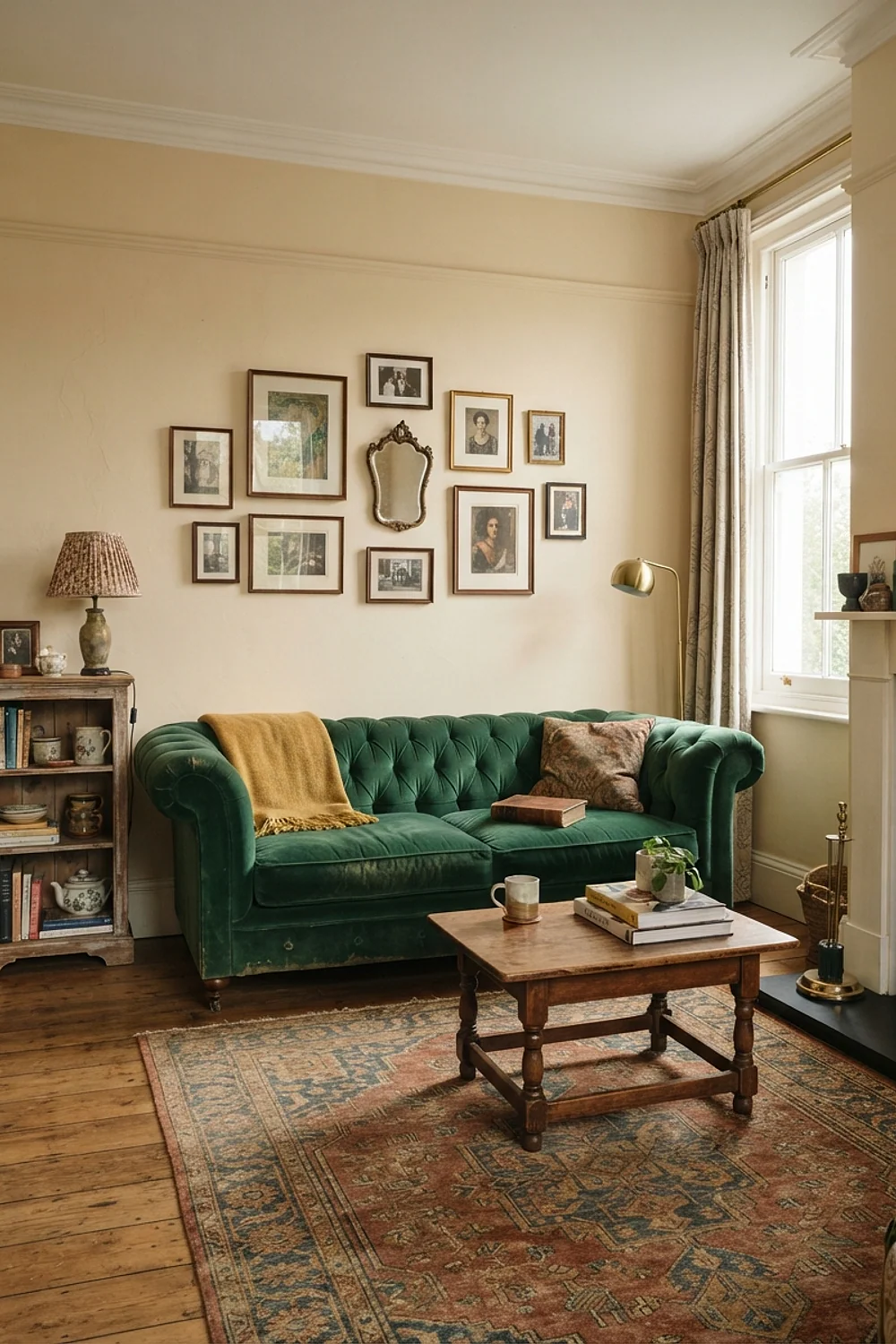
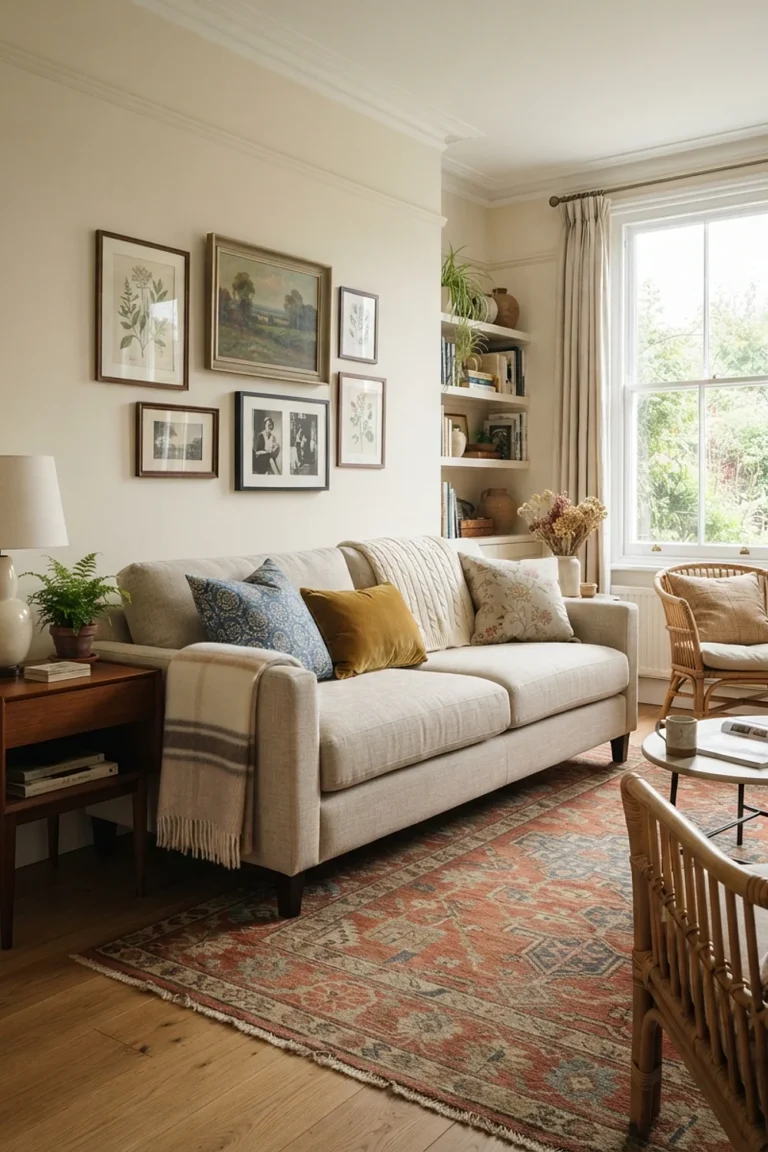
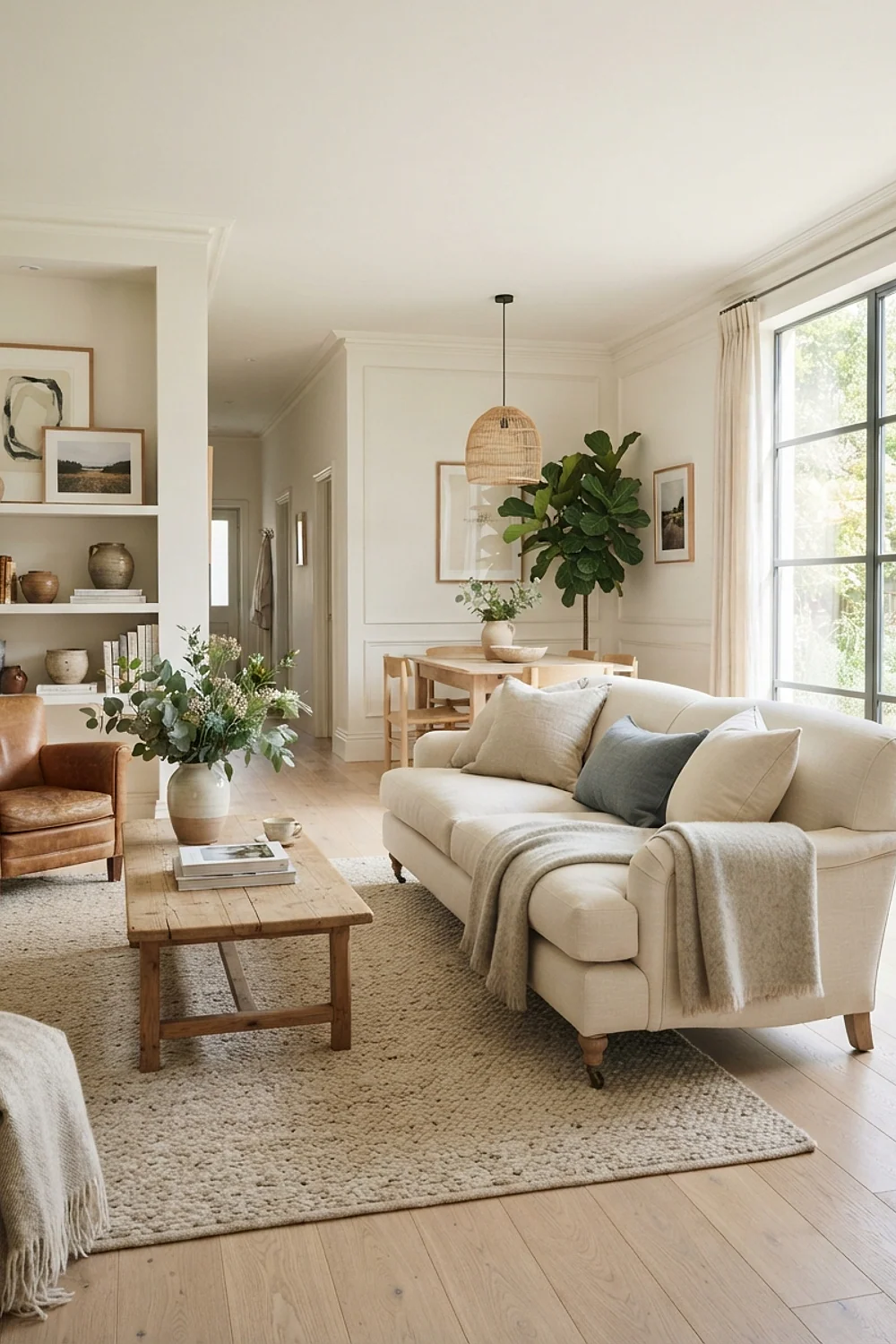
A 60-30-10 split gives roughly 60 percent of the room to a quiet base (walls, large rug, sofa), 30 percent to a secondary tone, and 10 percent to an accent. It works because the eye needs one place to rest and one place to land. A greige wall such as Farrow & Ball Skimming Stone, a mushroom sofa and a rust cushion pair is a textbook example.
It suits anyone who tends to buy every color they love. The trap is treating the accent as 25 percent of the room, which turns a calm scheme into a busy one. Swap cushion covers and throws first, since they’re the cheapest way to test an accent.
Bouclé beside brass, linen beside lacquer
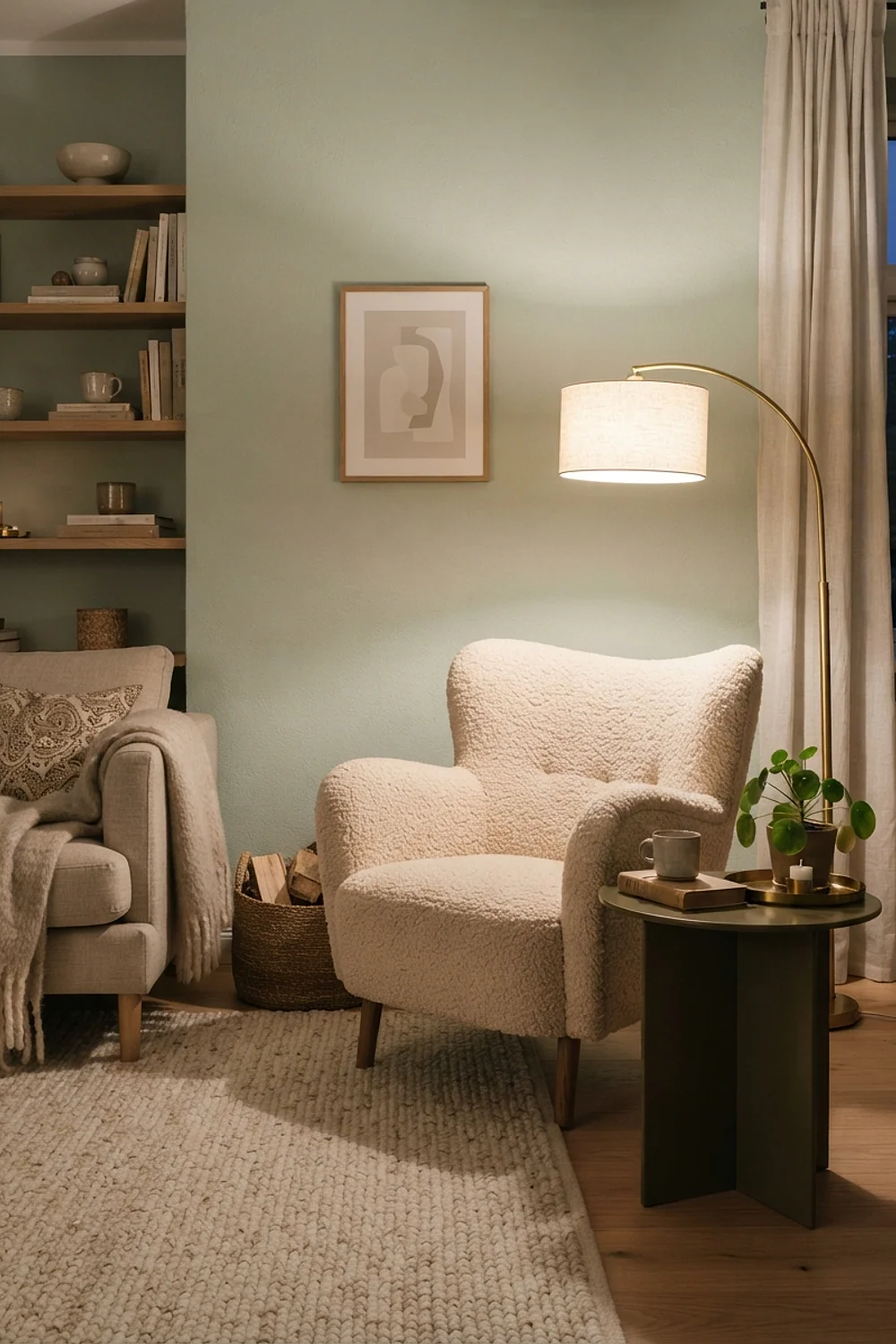
Bouclé beside polished brass works because a soft, matte surface needs a hard, reflective one to feel intentional. A room made only of nubby fabrics reads sleepy, and a room made only of glossy ones reads cold. Aim for at least three distinct surfaces: something woven, something smooth and something with sheen.
This is the fix for a living room that looks fine in photos but flat in person. Run a hand over each major piece and ask whether two of them feel the same. If they do, replace the smaller one, usually a cushion or a lampshade, not the sofa.
A rug that reaches under the front legs
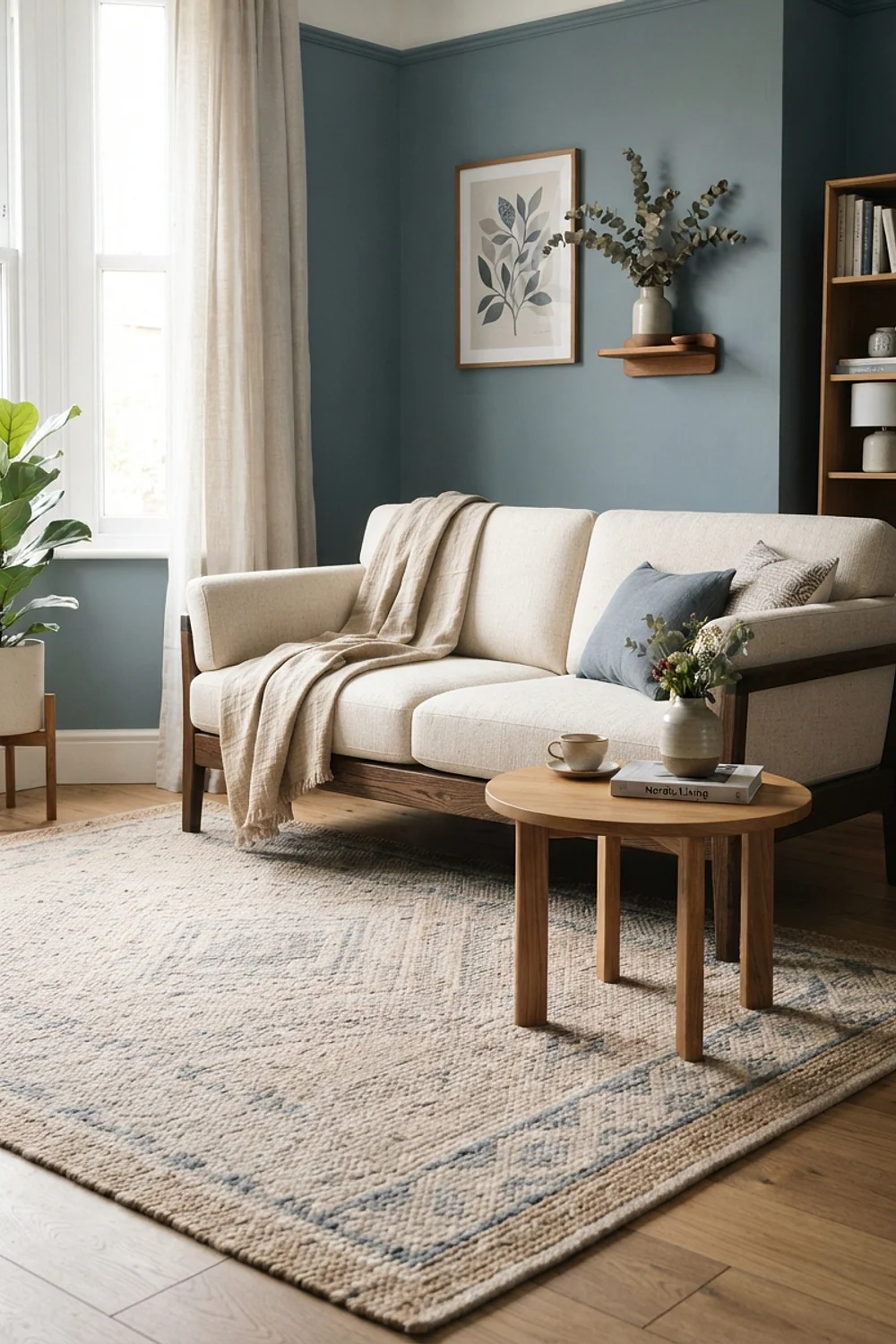
An 8-by-10 rug is the smallest size that lets the front legs of the sofa and armchairs rest on it, and a 9-by-12 is better in anything over 15 feet long. Floating a 5-by-8 in the middle of the seating area is the classic error. It shrinks the room visually and makes every piece look like it’s drifting.
A flat-weave wool in the 8-by-10 range runs about $400-700 new, and vintage Turkish or Persian pieces turn up secondhand for less. Add a thin non-slip pad, 1/4 inch, so the edges don’t curl and the rug stays put without any glue.
Fourteen to eighteen inches to the coffee table
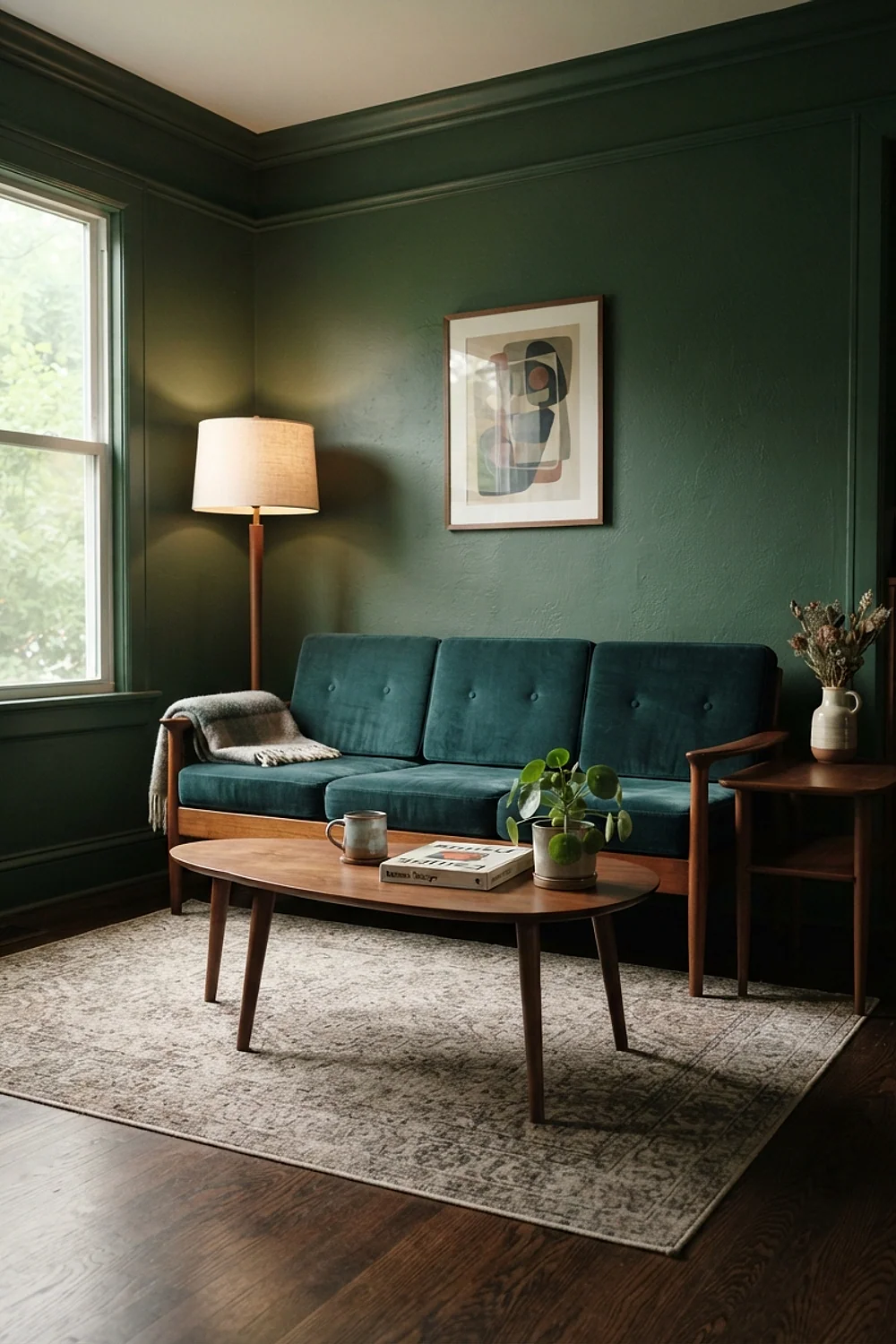
Coffee tables sit 14 to 18 inches from the sofa edge. That gap lets a knee pass through and a mug reach the surface without a lean. Most people push the table too far away because the room feels crowded, which makes every drink a small act of reaching.
Facing seats should be about 8 feet apart for conversation at normal volume. Mark the layout on the floor with blue painter’s tape and live with it for two days before moving any furniture. Tape can be undone in seconds, and a sofa can’t.
Bulbs rated 2700K at three heights
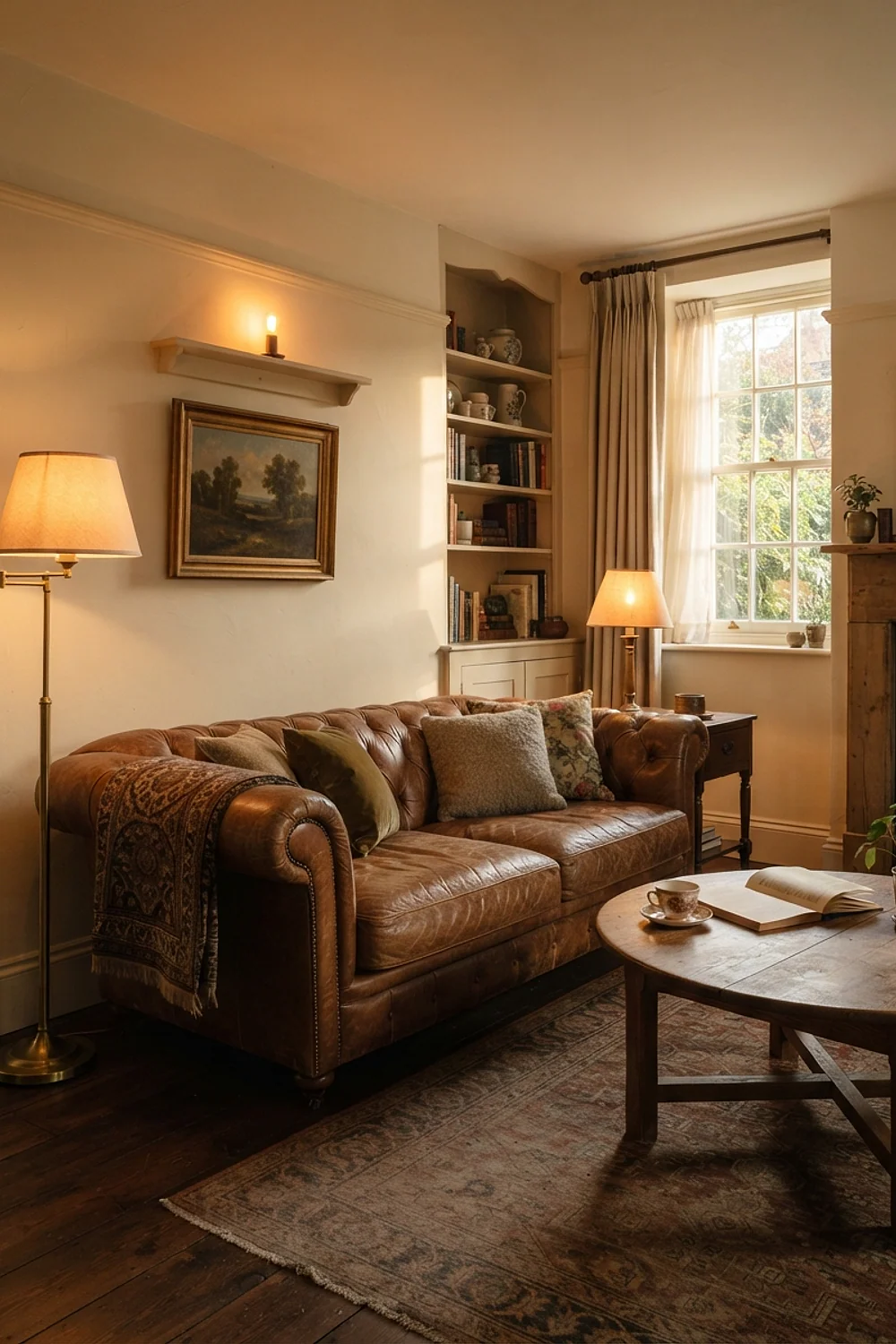
Bulbs rated 2700K give the amber glow of a candle, and that glow is what makes a living room feel finished at 4pm in November, when daylight drains out of the window. Pair them with lamps at three heights: a floor lamp near 60 inches, a table lamp near 28 inches and something low on a shelf.
Lamps beat ceiling lights, every time.
A single overhead fixture throws shadows under the eyes and flattens every surface. If wiring is off the table, plug-in wall sconces with a cord cover do most of the same job, and they go with you when you move.
A seat about 20 inches deep
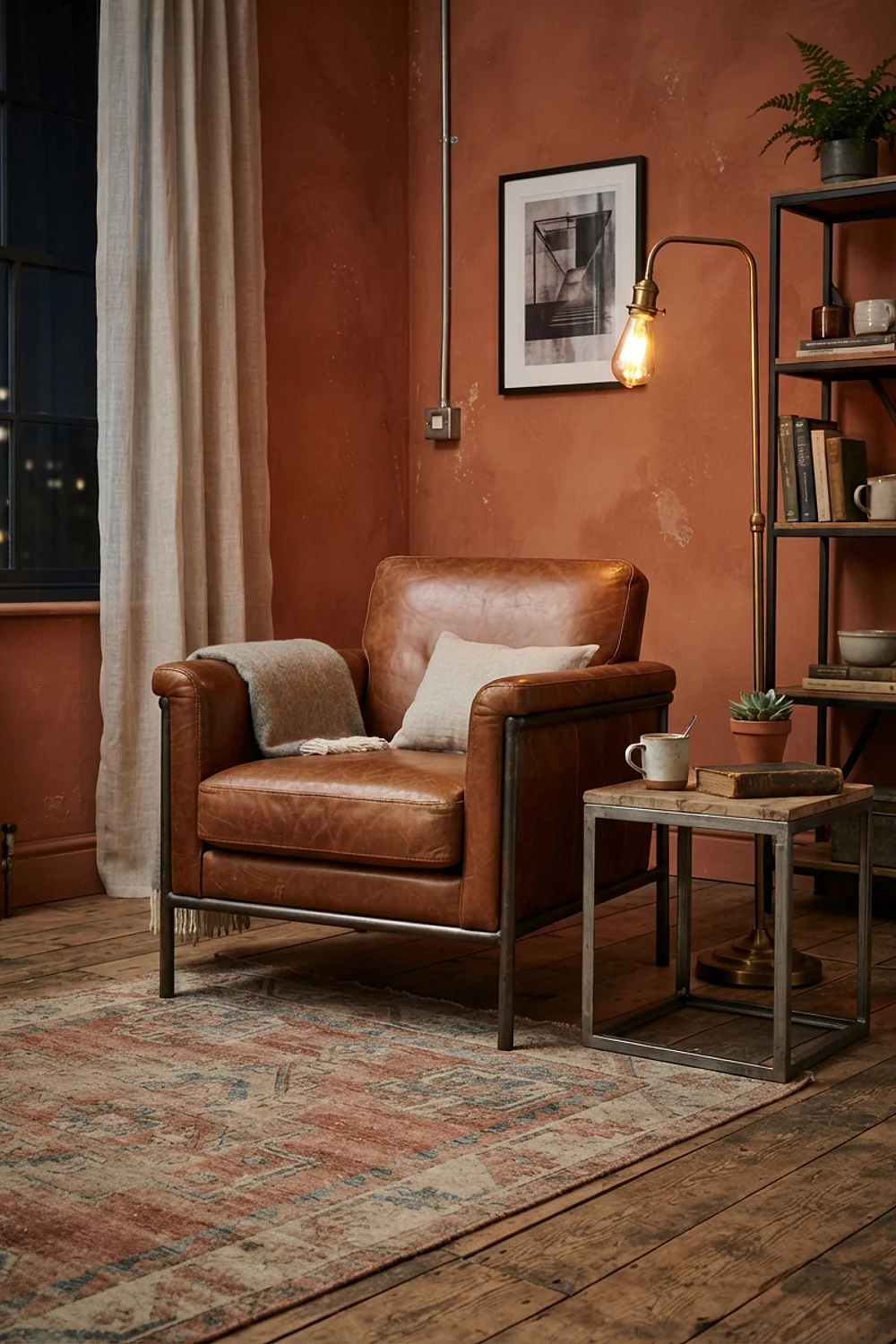
A seat about 20-22 inches deep, with a seat height of 17-19 inches, is where most adults sit comfortably for an hour without tucking a leg underneath. Deeper sofas photograph well and look generous, but anyone under 5’6″ ends up with a cushion wedged behind the back to compensate.
Velvet and tight-weave linen blends are the best bet here. They hold up to daily use and feel good under the palm. A washable slipcover is the reversible choice: it protects the upholstery and can be replaced when the color stops working.
A closed-door credenza 16 inches deep
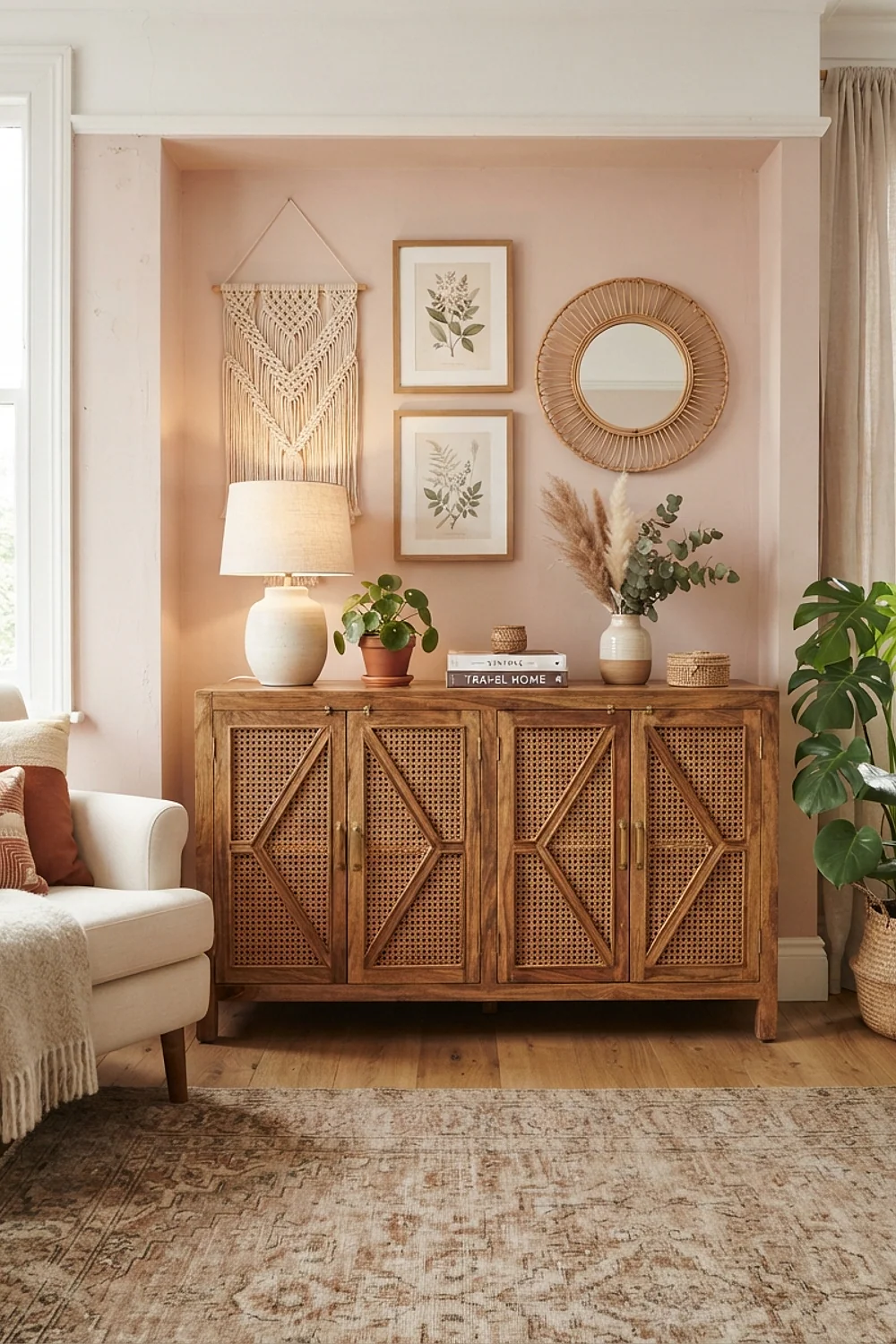
A closed-door credenza, 16 inches deep and about 30 inches high, hides remotes, chargers and board games. That keeps the surfaces clear enough for a lamp and one good object. Open shelving looks lovely in a magazine and chaotic by Wednesday.
Secondhand mid-century sideboards are the best source, often $150-300 and built from solid wood, not veneer over particleboard. Check that the drawers glide and the back panel isn’t water-stained. Change the hardware for a few dollars and the piece looks bespoke.
Breaking the rules on purpose
Rules are scaffolding, and some of them stop helping once the room gets small. The standard advice is to float the sofa off the wall so the space feels bigger. In a room under about 12 feet wide, that backfires.
Floating the sofa eats roughly 30 inches of floor behind it, and that sliver is too narrow to use. Pushing it flush against the long wall opens a clear walking lane and lets the rug breathe. A narrow console behind it is the only thing a floating layout needs, and a small room can’t spare it.
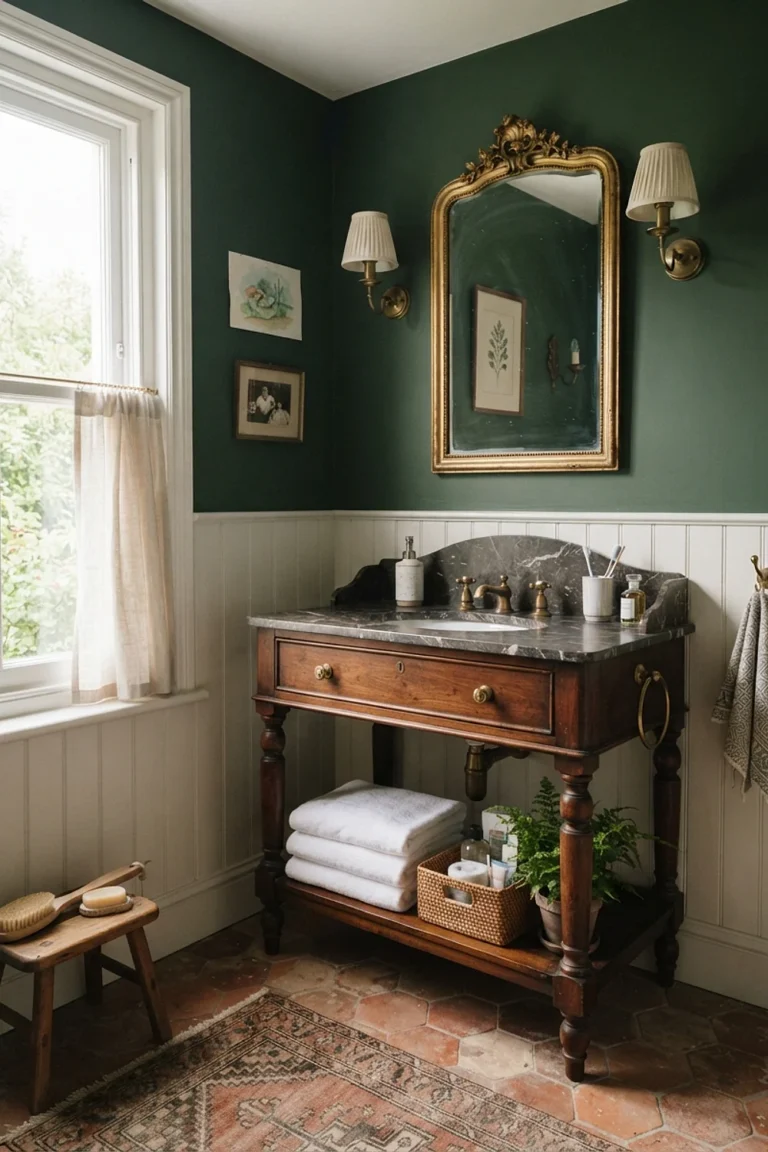
Here’s a counterintuitive fact worth knowing: a dark wall can make a small room feel larger. Deep green or ink blue blurs the corners, so the eye stops reading where the walls end. Test it with a 2-by-2 foot painted board, which can be moved from wall to wall and returned to the paint shop.
- Break the rule when the room is under 12 feet wide.
- Break it when a rule needs a permanent change to follow.
- Don’t break it just because the right piece is on sale.
Common mistakes
Elegant living room decor goes wrong in predictable places, and most of them are easy to avoid. The pattern is almost always the same: something was bought for the picture in the listing, not for the room it was going into.
Furniture sets are the first trap. A matched sofa, loveseat and armchair in one fabric makes a room look like a showroom floor, and a showroom floor is not a home. Mix two silhouettes and two upholstery tones instead.
Curtains hung at the window frame are the second. Mount the rod 4-6 inches above the frame and extend it 8-12 inches past each side, so the glass is fully exposed in daylight and the window looks taller. Panels should just kiss the floor.
- Art hung too high. The center should sit near 57 inches from the floor, and lower above a sofa.
- One large central light and nothing else.
- Every piece pushed to the wall, leaving a bare hole in the middle.
- Paint chosen from a chip under store lighting instead of a sample on the wall at 4pm.
Large sample boards fix the last one. Paint two 12-inch squares in different corners and check them at morning and late afternoon before committing.
Bringing elegant living room decor home
Elegant living room decor comes from layering rules gradually, not from a single shopping trip. Start with the ones that cost nothing: tape out the layout, check the curtain rod height, and swap every bulb for 2700K.
The bigger purchases can wait until the room tells you what it needs. Save or pin this list so it’s easy to find again, and measure the floor for an 8-by-10 rug before anything else gets bought.