14 Pink Kitchen Decor Ideas That Last
A 10-by-12 kitchen with one window leaves no room for a pink that misbehaves, so pink kitchen decor has to start with undertone, not with whatever shade is circulating this year. The 14 pairings below each come with a real paint name or material, so you can choose one and commit.
Forget the idea that pink means sugary. Choose the right undertone and it reads like plaster, clay, or dried rose petals, and it stays good-looking for a decade.
The color logic behind great pink kitchen decor
Pink comes in three undertone families. Yellow-leaning pinks (peach, clay, plaster) flatter wood and brass. Neutral blushes go with nearly everything. Blue-leaning pinks (rose, mauve) look best next to chrome, charcoal, and gray stone.
The common early mistake is picking a saturated bubblegum shade because it dominates every feed. It backfires because saturation dates fast, and it clashes with every finish you replace later. Soft, grayed pinks behave like neutrals, and that’s why they last.
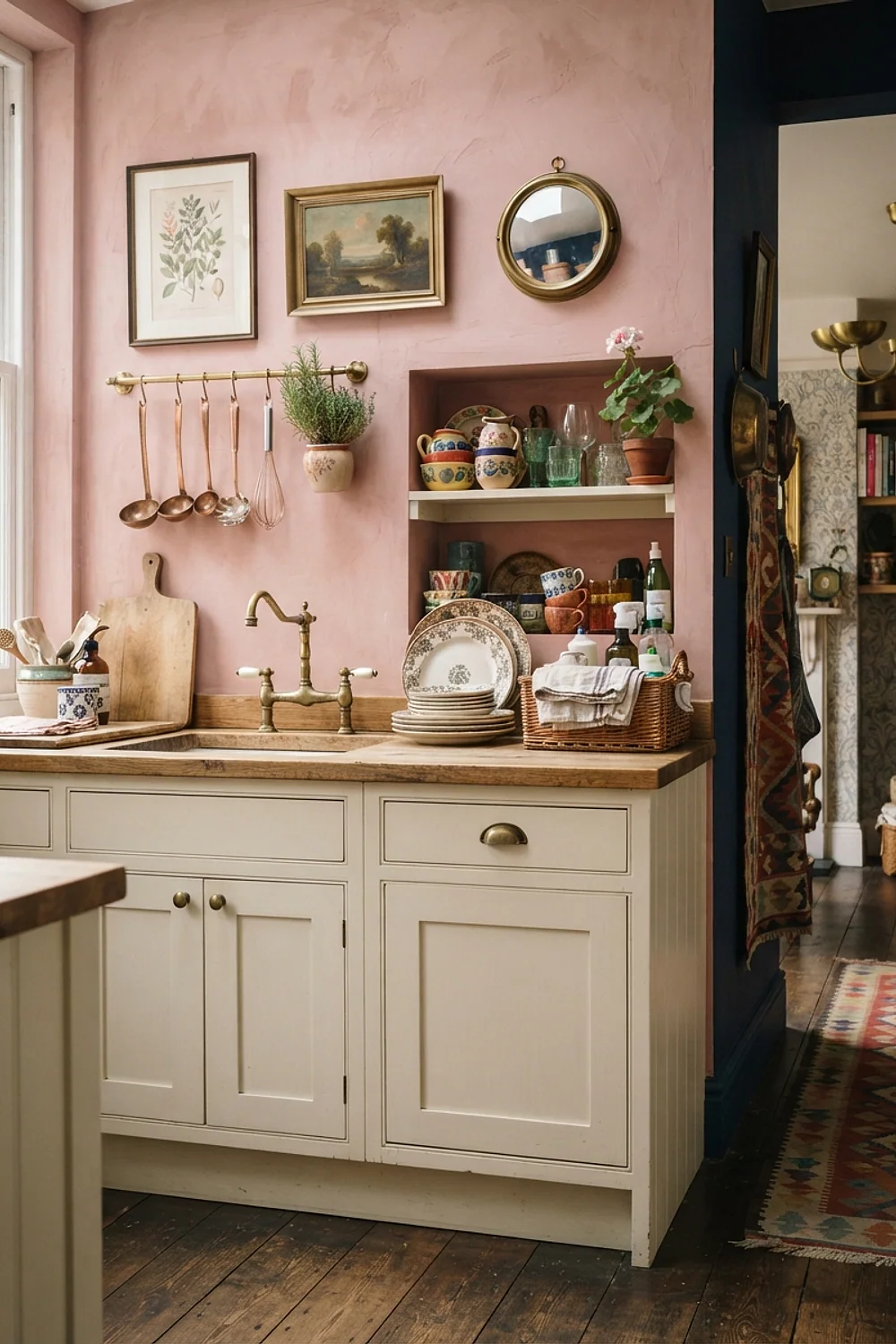
Plaster pink walls over warm white cabinets
Satin-finish walls in a plaster pink such as Farrow & Ball Setting Plaster handle splatter better than flat paint, because satin wipes clean with one pass of a damp cloth. Over warm white cabinets, the pink reads as a soft shadow rather than a theme.
This suits a family kitchen where walls get touched daily. Stay with creamy whites like Benjamin Moore Swiss Coffee, since a stark blue-white makes the pink look chalky.
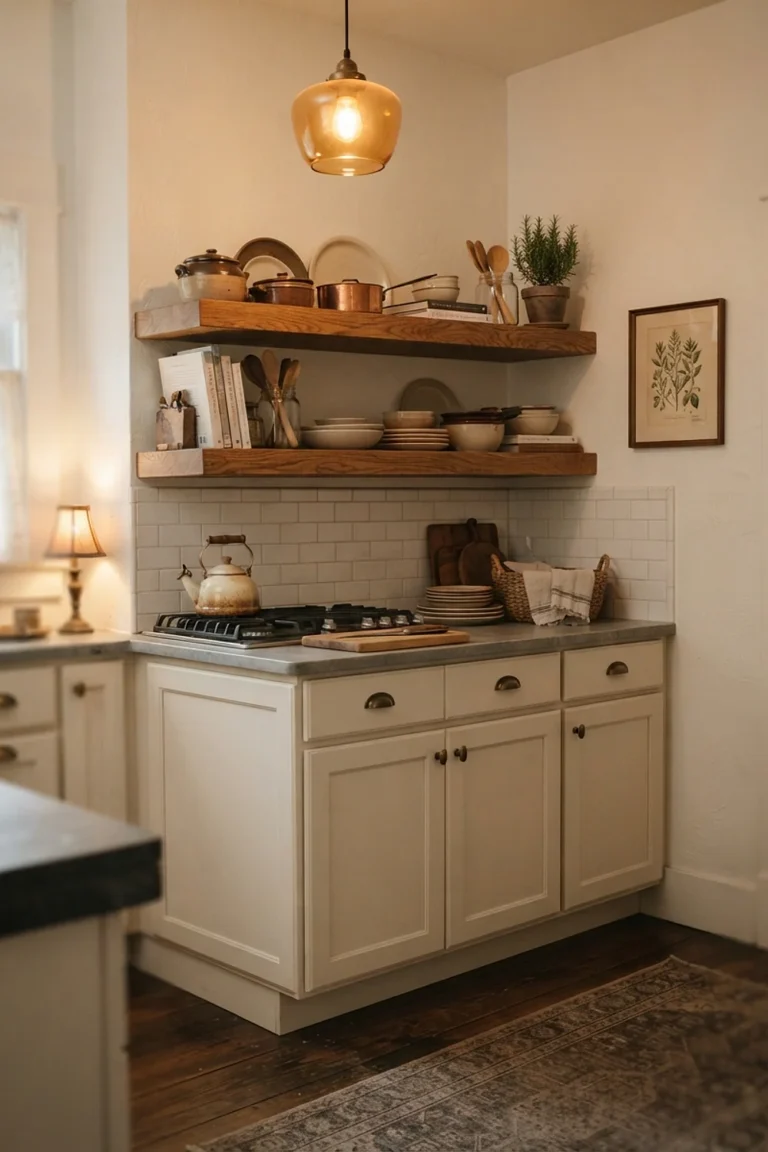
Open shelves backed in deep rose
The back panel of an open shelf is only about 12 inches deep, so painting it a deeper rose such as Farrow & Ball Sulking Room Pink gives you a color hit without committing the whole room. Everyday plates sit in front of it, which gives the pink a reason to exist.
Renters like this one because a back panel repaints in an afternoon. Keep the shelf boards white or natural oak, or the pink swallows them.
Unlacquered brass pulls on terracotta pink
Unlacquered brass pulls darken within a few months, and that patina flatters yellow-leaning pinks like Sherwin-Williams Cavern Clay. At roughly $8 to $14 each, a run of 20 pulls adds up, so order one sample before the full set. The metal should feel cool and slightly heavy under your fingers.
Skip shiny lacquered gold. It fights the softness of pink and dates the room quickly.
A pink island with a greige perimeter
Pink kitchen decor works best when the color sits on one large object, and a 36-by-72-inch island is ideal for it. Keep the perimeter cabinets in greige, so the walls and uppers stay flexible if your taste shifts.
This layout fits open-plan homes, where the island is seen from the sofa. Avoid a pink floor beneath it, because pink on pink erases the island’s edges.
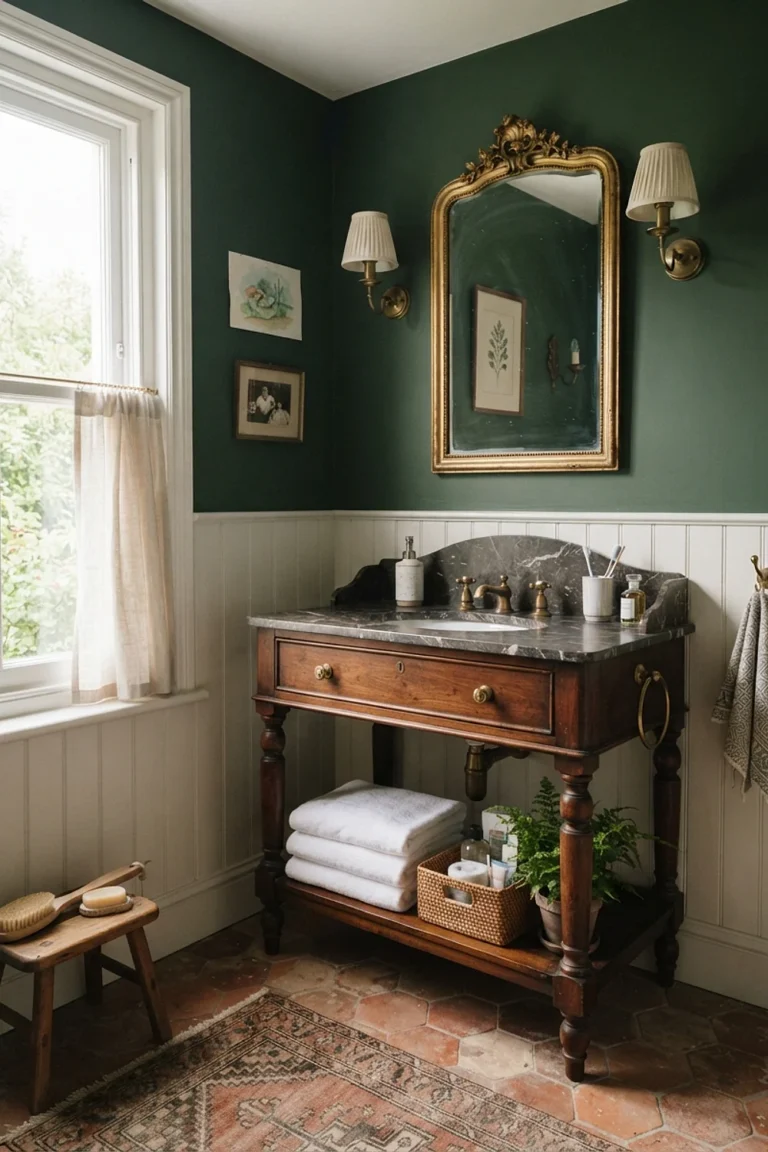
Calamine pink with dusty sage
Pink and green sit near opposite sides of the color wheel, which is why the combination feels so natural. A pale pink like Farrow & Ball Calamine next to a gray-leaning sage such as Sherwin-Williams Sea Salt keeps that contrast quiet.
Pick the sage with gray in it. Emerald or kelly green beside pink turns the room into a holiday card.
Unglazed terracotta floors under pale pink walls
Unglazed terracotta in 8-inch squares grounds a pale pink wall, because the orange in the clay is the same family as the pink. Underfoot, the tile is slightly gritty and holds the day’s warmth near a sunny window.
The trade-off is porosity. Seal it with a penetrating sealer, then reseal every one to two years, or red wine and olive oil will leave permanent marks.
A wool runner striped in rose and oatmeal
A 2.5-by-8-foot wool runner cushions the spot in front of the sink, where knees and heels take the most abuse. Wool has a dry, springy texture that polyester can’t match. Expect to pay $120 to $200 for a decent one.
It suits galley kitchens with hard flooring. Always add a rubber pad underneath, because a sliding runner on tile is a hazard.
More pink kitchen decor pairings for stubborn rooms
One pink wall at the end of a galley
A single 9-foot pink wall at the far end of a narrow galley pulls the eye past the cabinets and stretches the room by a perceived foot or two. A pale shade like Benjamin Moore First Light bounces light back down the room.
This fits kitchens under about 8 feet wide. Painting all four walls pink in that footprint gives the color nowhere to rest.
Bulbs chosen for the pink, not the other way around
Under 2700K bulbs, a blue-leaning rose stays soft, while 4000K bulbs flatten it into gray because cool light strips out the warmth. By 4pm, west light turns a yellow-leaning pink almost peach, so west-facing rooms suit bluer pinks.
North-facing kitchens do better with yellow-leaning shades, which warm the cooler daylight, but only if the bulbs stay warm, since swapping in cool LEDs later undoes the whole effect. Test bulbs before buying paint in bulk, and judge samples at night too.
Stainless appliances, not pink ones
Saturated pink appliances lock a kitchen to one moment. Paint changes in a weekend, but a $2,500 range does not, and resale buyers rarely share the enthusiasm. Spend the color on walls and cabinets instead, where a repaint is cheap and reversible.
Stainless or matte black appliances disappear against soft pink and stay useful for 15 years. This suits owners who may sell within a decade, and anyone working with a mid-range budget. Watch for fingerprints: basic stainless smudges easily, so look for a fingerprint-resistant finish.
Charcoal lower cabinets under pink uppers
Dark lowers such as Benjamin Moore Kendall Charcoal hide kick-plate scuffs and dishwasher splashes, which is where most kitchens show wear first. Pink uppers keep the eye-level zone light, so the room does not feel heavy. This suits households with dogs, kids, or both, and small kitchens that still need to feel open.
Choose a blue-leaning pink for the uppers, since yellow pinks can look muddy against charcoal. Also avoid flat paint on the lowers, since satin wipes clean far more easily.
The inside of a pantry door in bold pink
The inside face of a pantry door, often 24 to 30 inches wide, is a free canvas. Painting it in a saturated pink gives a small jolt of color each time it opens, without touching the main palette.
Use a semi-gloss, since door edges take fingerprints. If the pink fades on you, one quart repaints the door in under an hour.
Stoneware and linen in oyster pink
A matte stoneware pitcher in oyster pink runs about $35, and three linen tea towels cost roughly $24. These small pieces let you test pink in the room before any paint touches a wall, so a wrong undertone costs a few dollars instead of a repaint. Linen starts a little stiff and rustles when folded, then softens with each wash.
It suits anyone who wants the color without a commitment, including renters. Avoid buying a full set until the pitcher has been seen on the counter in both morning and evening light.
A split wall at 36 inches in Pink Ground
The lower 36 inches of the wall, painted pink with white above, form a classic dado line that protects the most-touched zone. Farrow & Ball Pink Ground is a gentle, slightly warm shade for the lower half.
It works on kitchens with a standard 8-foot ceiling. Keep the dividing line crisp with a thin strip of painter’s tape, or the split looks accidental.
Testing colors before you commit
Pink kitchen decor changes more across a day than almost any other color family, so a sample card is not enough. A gray February afternoon can turn a blush into oatmeal, while evening bulbs push it toward salmon.
Run through this checklist before buying gallons:
- Paint two 2-by-2-foot patches on different walls, since each wall catches different light.
- Check each patch at 8am, noon, 4pm, and under evening bulbs.
- Hold a cabinet door and a countertop offcut next to the patch.
- Leave it up for at least a week before deciding.
Sample pots cost about $8 each, which is cheap insurance against repainting a whole room.
Mistakes that keep showing up
Pink kitchen decor that feels too sweet is usually a problem of undertone or contrast, and neither needs a full repaint. Work through these fixes in order:
- Swap bulbs first. Going from 4000K to 2700K fixes a gray or salmon cast in minutes.
- Add something dark: black hardware, a charcoal stool, or iron frames to counter the sugar.
- Replace pink textiles with linen or wool in oatmeal, which dials the room back.
- Repaint only the single wall that bothers you, using a grayer version of the same pink.
Often the wall is fine and the white next to it is the problem. A cold white beside a warm pink looks off, and a creamier white settles it.
Where to start
Pink kitchen decor lasts when undertone leads and saturation stays soft. Pick one pairing from this list, live with it for a season, and adjust through accessories before touching the paint.
Save or pin this list so it’s ready when you start. Your first step: paint one 2-by-2-foot sample of a plaster pink like Setting Plaster and watch it for a full week.